

Migration is not a solitary act. It is not merely the movement of individuals from one place to another in search of work, refuge, or opportunity. Rather, it is a profoundly social process, one that involves the reorganisation and reproduction of relationships, traditions, and identities. When people migrate, they rarely do so alone in a social sense—they carry with them the patterns of family life, cultural belonging, and mutual support that have shaped their existence. These webs of connection are what we might best describe as migratory social networks.
Understanding migration through the lens of social networks helps us reframe public discourse. It draws attention away from the misleading image of the isolated migrant and instead focuses on the interwoven systems of kinship, faith, shared history, and reciprocity that migrants depend on, build through, and modify as they settle into new places. These networks function as both a source of immediate practical support—providing housing, work opportunities, and emotional solidarity—and as a means of maintaining and reshaping culture. They facilitate the retention of language, the continuation of faith traditions, and the negotiation of identity across generations.
The manifestation of these networks varies widely depending on the conditions of settlement and the policies of the host society. In some cases, they become firmly rooted in place, forming settled communities that integrate into civic life over time. These networks might be reflected in established neighbourhoods with places of worship, community-run shops, supplementary schools, and cultural events that coexist within the wider urban or rural fabric. The process of becoming settled is not about forgetting one’s origins, but rather about adapting those origins to the circumstances and opportunities of a new environment. The identity of the network evolves, retaining memory while forging new paths of belonging.
Other networks are able to extend themselves across cultural boundaries and become integrated into broader civic and institutional structures. These are networks that foster intercultural dialogue, participate in local democratic processes, and contribute to shared public life. Integration in this context is not assimilation. It is the creation of new forms of mutual dependence and shared space, where difference is not a barrier but a source of collective learning and adaptation.
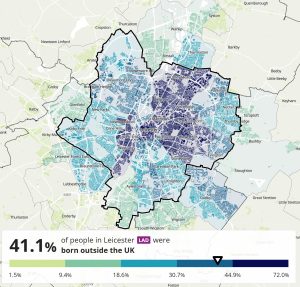 In contrast, some migratory networks become dispersed, either intentionally or through the mechanisms of policy and structural exclusion. Dispersed networks might be the result of asylum-seeking systems that separate families across cities or counties. They may arise in rural areas where small numbers of migrants are placed in isolation from others who share their language or cultural background. In such circumstances, the ability to sustain meaningful social connection becomes fragmented, and the strain on individuals increases. Technology, particularly mobile messaging apps and digital platforms, can help maintain transnational and long-distance ties, but these often fail to compensate for the loss of shared, place-based experience.
More concerning still are the instances where networks become isolated. This can occur when migrant communities face exclusion or hostility and are left to form parallel systems of education, employment, and information. These networks function in survival mode, turning inward out of necessity, and often reproducing older or more conservative forms of identity that may feel safer within a hostile or indifferent environment. In these cases, the lack of meaningful engagement with wider society can lead to further mutual misunderstanding and can deepen the divides that integration policy seeks to address.
In all these scenarios, the role of communication—and especially community media—becomes critical. Community media, unlike commercial or state media, is rooted in participation, local accountability, and cultural responsiveness. It is one of the few public platforms where migrant and host communities can genuinely shape how they represent themselves and how they interact with others. Where national and global media tend to flatten or stereotype the migrant experience, community media allows for depth, nuance, and multiplicity.
Through locally produced radio, video, journalism, and digital storytelling, community media provides a space for linguistic diversity to thrive. Broadcasting in languages other than English is not an obstacle to integration; rather, it is an expression of cultural sustainability. It enables communities to retain identity while also accessing important civic information in a language they can understand. At the same time, this kind of media can facilitate a deeper understanding among host communities, challenging the tabloid portrayals of migration as a problem, and replacing them with narratives of adaptation, resilience, and commonality.
Community media also enables people to map and explore the networks they live within. By documenting local stories, interviewing community influencers, and sharing personal testimonies, these platforms reveal the ways that migrants support one another and interact with the broader society. They allow us to see the hidden scaffolding of community life—the informal childcare networks, the collective savings clubs, the faith-based support groups, and the educational ambitions that are often invisible in mainstream portrayals.
For host communities, these processes can be both enlightening and unsettling. Migration changes the composition of neighbourhoods, schools, workplaces, and public spaces. People who have long-standing attachments to place may feel disoriented or even displaced by the changes they witness. The discomfort that arises in such situations is often rooted not in racism or xenophobia per se, but in a loss of cultural confidence and a lack of access to constructive dialogue. Community media can provide a structured and respectful means of rebuilding that confidence by creating shared narratives that do not erase difference, but make space for collective renewal.
However, such media cannot be sustained on goodwill alone. It requires infrastructure, training, time, and trust. If we recognise that migration is an ongoing and structural feature of our society, then we must also recognise that our communication systems must be equipped to handle it. As part of the foundational economy—that is, the core infrastructure upon which a functional and inclusive society depends—we must invest in place-based media that is accountable, inclusive, and reflective of the communities it serves.
This includes supporting long-term funding for community media centres, training programmes for migrant and settled residents alike, and partnerships between community media and local institutions. It includes developing content strategies that are driven by community needs and social value, rather than market metrics or entertainment algorithms. And it includes embedding media and communication into our wider strategies for housing, education, health, and local governance.
Without this kind of investment, we leave the field open to misinformation, sensationalism, and division. With it, we can create a media culture that helps people understand the world they live in, relate to the people they share it with, and participate in shaping its future.
Migration will continue to shape our society in the decades to come. If we are to meet this reality with honesty, care, and shared purpose, then we must centre the role of migratory social networks and ensure that our communication systems are capable of supporting them. Community media is not just a channel; it is a civic tool, a democratic space, and a means of belonging—for everyone.