

Protecting people from abuse and protecting independent reporting are responsibilities that Parliament should be able to uphold together. The draft Conversion Practices Bill raises questions about whether the boundaries between them are sufficiently clear.
For journalists, the issue extends beyond whether a prosecution would ultimately succeed. An investigation, threatened application for a court order, or prolonged dispute about editorial language can discourage reporting long before a judge decides anything.
That possibility deserves explicit attention from the Government, Ofcom, IPSO, Impress and the Equality and Human Rights Commission. News organisations, journalists’ representatives and community media should also be involved. Freedom to report must be practical and affordable, rather than something available only to organisations able to defend expensive litigation.
Separate Sexual Orientation From Gender Identity
Protecting lesbian, gay and bisexual people from abusive attempts to change their sexual orientation requires its own clear justification and safeguards. Proposals concerning transgender or non-binary identity require separate scrutiny. Combining these matters under a single umbrella must not obscure differences or prevent examination of possible conflicts.
Therefore, any assessment should distinguish LGB matters concerning sexual orientation based on sex from TQ+ matters concerning self-identified gender identity. They raise different questions about evidence, personal experience, legal definitions and public policy.
The draft’s definition of transgender identity includes people who identify as neither male nor female, or not solely male or female. Its principal offence requires conversion intent, abusive conduct and specified serious harm or serious distress affecting daily activities. It does not simply criminalise disagreement or offence.
Nevertheless, a journalist needs to distinguish someone’s account of their identity from independently established facts about their sex. Reporting that a person identifies as non-binary can accurately describe their self-understanding. It does not establish that their biological sex is neither male nor female. Similarly, identifying with a gender different from one’s sex does not, by itself, substantiate a claim about a change of biological sex.
Respectful reporting can acknowledge personal experience while maintaining that distinction. Subjective experience is evidence of what someone reports feeling; it is not automatically evidence for every factual proposition associated with that feeling.
What Happens When Accurate Reporting Causes Distress?
Consider a court report in which a defendant’s biological sex is relevant to understanding the proceedings. Could a journalist face a complaint because the report distinguishes that sex from the defendant’s stated gender identity?
The draft does not make reporting biological sex an offence in itself. Informing the public is different from intending to change the person being reported on. That distinction should provide substantial protection.
But how readily could an allegation that reporting applies psychological pressure lead to an investigation? What evidence would be required before an editorial decision was treated as conduct directed towards changing an individual’s identity?
These questions should be answered before legislation takes effect.
A report can be accurate and still breach a lawful reporting restriction. Equally, a report can cause distress without being inaccurate, unlawful or abusive. Those distinctions are familiar to journalism. They should remain visible in the interpretation of this legislation.
IPSO’s guidance recognises both freedom of expression and obligations concerning accuracy, privacy and discriminatory references. Its guidance on sex and gender identity does not prescribe a definitive vocabulary or seek to prohibit reporting legal proceedings.
The question is whether a new legal process could indirectly unsettle those editorial boundaries.
Concerns That Deserve Examination
Several organisations have challenged the draft. Their arguments should be examined as arguments, with their evidence tested, and their legal predictions distinguished from established consequences.
Gay Men’s Network has questioned the Bill’s legal certainty. In parliamentary evidence, Dennis Kavanagh raised concerns about the absence of a requirement to intend harm, the interpretation of abuse, private prosecutions and the deterrent effect of criminal proceedings.
Sex Matters has published scenarios illustrating its concern that ordinary conversations, professional decisions and parental actions could attract investigation. It argues that uncertainty about the boundary between lawful conduct and abuse may discourage people from exercising judgement. These scenarios are warnings about possible applications, rather than findings that such conduct would necessarily satisfy the offence.
LGB Alliance argues that the draft could inhibit discussion of same-sex attraction, particularly where young people are questioning their identity. It also raises concerns about detransitioners speaking about their experiences and about professionals becoming reluctant to explore alternatives to an initially stated gender identity.
Genspect has published commentary questioning the treatment of gender identity alongside sexual orientation. In an article by Maria MacLachlan, the concern is that fear of complaints or prosecution could discourage open-ended exploration of distress.
The Free Speech Union has also challenged the distance between ministerial assurances and express safeguards in the draft, including the breadth of proposed protection orders.
Much of this criticism concerns families and healthcare. The media implications require their own assessment. Could interviewing these organisations, reporting detransitioners’ experiences or investigating contested identity claims become a source of legal pressure?
The Government maintains that the thresholds are designed to preserve legitimate expression. Supporters, including Stonewall and Galop, have given evidence about abuse they believe requires additional protection. Scrutiny should examine both the protection being sought and whether the proposed means are sufficiently precise.
Accountability Must Not Become Blurred
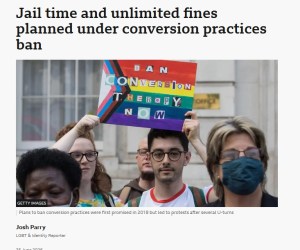 The proposed civil protection orders deserve particular attention. They can impose broad conditions for statutory protective purposes, and breach without reasonable excuse would be a separate offence. These are not unrestricted powers to suppress unwelcome coverage, but their possible interaction with publication needs explaining.
Existing safeguards matter. Section twelve of the Human Rights Act requires particular attention to freedom of expression, journalistic material and public interest when courts consider relevant relief. It also provides safeguards concerning notice and restraints on publication before trial.
However, accountability could still become blurred in practice. A hypothetical complaint might move between an editor, a regulator, police, lawyers and an employer. Each could address a different aspect while nobody takes responsibility for the cumulative deterrent effect.
Regulatory compliance would not settle a criminal allegation. A police investigation would not establish a breach of editorial standards. An employer’s concern about reputational damage would not establish that an article was wrong.
These distinctions need to be understood throughout the system. Otherwise, organisations may quietly remove material, avoid an interview or change an accurate description to reduce exposure. Self-censorship can emerge from uncertainty without anyone issuing an explicit instruction to censor.
Julie Bindel, Stephen Ireland And The Importance Of Independent Scrutiny
Julie Bindel’s independent reporting on Stephen Ireland and Pride in Surrey provides a disturbing example of why journalists must remain free to scrutinise people who have acquired institutional credibility.
On 30th June 2025, Ireland was sentenced to twenty-four years in prison, with a further six years on extended licence, for offences including the rape of a twelve-year-old boy. He was also convicted of perverting the course of justice. Reporting of the case records how Ireland and his co-defendant attempted to conceal their offending by deleting material from their phones.
Before his exposure, Ireland had cultivated a very different public reputation. In her investigation for UnHerd, Bindel describes his relationships with police and public bodies, his local radio presence, and the experiences of whistleblowers who say their safeguarding concerns were dismissed or treated as discriminatory. Reporting by Jo Bartosch also describes his appearances on BBC Radio Surrey, including as a presenter. Such visibility and association could confer credibility, although they do not establish that those organisations knew about his crimes or endorsed his conduct.
Bindel’s subsequent Pride and Predator investigation examines how that credibility developed and how warnings were handled. She also reports being removed from a Pride in Surrey event after asking safeguarding questions. Her work demonstrates why independent scrutiny must extend to organisations and individuals previously welcomed by public institutions and given a media platform.
This case poses a serious hypothetical question for the Conversion Practices Bill. Had comparable legislation been in force, could someone in Ireland’s position have attempted to characterise persistent questioning as an abusive effort to change their sexual orientation or transgender identity, rather than an investigation into conduct and safeguarding?
There is no evidence that Ireland made such an allegation, and the draft Bill was published after his conviction. Nor would an allegation, by itself, establish an offence or justify stopping an investigation. Investigating child sexual abuse is not an attempt to change sexual orientation or gender identity. Sexual offending against children must never be conflated with either.
Nevertheless, a person seeking to conceal wrongdoing might try to exploit uncertainty about the legislation by making a complaint, threatening proceedings or seeking restrictions on publication. The concern is that even an unsuccessful attempt could delay reporting, increase legal costs, frighten sources or encourage an editor to abandon an investigation. Ireland’s documented attempts to conceal evidence make the wider question of safeguards against obstructive tactics particularly relevant, without establishing how he would have used a law that did not then exist.
The Government should therefore explain what would prevent an allegation of conversion practices from being used to obstruct legitimate investigative journalism. Ofcom, press regulators and the EHRC should examine the same question within their respective responsibilities. Clear procedures should distinguish evidence of prohibited conduct from an attempt to recast scrutiny of wrongdoing as an attack on identity.
No reputation for inclusion, public-service partnership or favourable media exposure should place anyone beyond investigation. The freedom to ask difficult questions is an essential part of safeguarding, especially when those questions concern someone that respected institutions have previously trusted.
Who Needs To Provide Clarity?
The Government and Parliament should establish the legal boundaries. They should explain how conversion intent could be distinguished from a journalistic purpose, whether additional safeguards are needed for public-interest reporting, and how publication-related protection orders would respect open justice.
Ofcom should explain the implications for broadcasters. Its Broadcasting Code already requires news to be reported with due accuracy and presented with due impartiality. Broadcasters need practical examples showing how to distinguish sex, self-described identity and contested claims while meeting those obligations. Ofcom guidance cannot confer immunity from criminal law, but it can reduce avoidable uncertainty within broadcasting regulation.
IPSO and Impress should address the corresponding questions within their respective press standards frameworks. What would responsible reporting look like in court coverage, investigative interviews and accounts of detransition? How would complaints about identity-related distress be distinguished from demonstrated failures of accuracy or other standards?
The EHRC should examine how the proposals interact with equality rights, protected beliefs and freedom of expression. Its initial response already calls for clear definitions and boundaries that avoid disproportionate restrictions. A detailed assessment of journalistic activity would give that principle practical substance.
Police and prosecutors would need clear operational guidance. The News Media Association, Society of Editors, journalists unions and Media Lawyers Association should be invited to contribute worked examples and identify procedural risks.
Small Newsrooms Need Practical Protection
A community newspaper, freelance reporter or volunteer radio station may have little access to specialist legal advice. The prospect of defending an article can therefore influence decisions even where the underlying reporting is sound.
Any assessment of the Bill’s effects should include those organisations. It should consider the cost of responding to complaints and proceedings, alongside the likelihood of conviction. The practical freedom to investigate matters locally is part of press independence.
Parliament should ask for a clear distinction between reporting an identity claim, endorsing it and attempting to change the person making it. It should also ensure that neither factual accuracy nor public-interest scrutiny becomes dependent on avoiding every possibility of subjective distress.
The Joint Committee is accepting written evidence until 5 pm on Monday 16th November 2026. There is still an opportunity to put these questions directly into parliamentary scrutiny.
People should be protected from abuse. Journalists should be able to investigate, describe and question matters of public importance. Legislation should make those responsibilities clear enough that editors can exercise judgement without having to guess where the law ends and pressure to accommodate a contested identity claim begins.